

If everything you know about voodoo comes from a movie poster, it's probably wrong. The dolls, the pins, the curses — that's Hollywood. The actual tradition, which Beninese people call Vodun, is something much older, much quieter, and far more deeply woven into daily life than any horror film could suggest.
I grew up in Ouidah, the spiritual capital of Vodun. My grandmother kept a small shrine in the courtyard. There was nothing scary about it. It was where the family gave thanks, where decisions were thought through, where a difficult ancestor was asked, gently, to leave well enough alone.
A religion older than most you know
Vodun predates Christianity in West Africa by centuries. It is the indigenous spiritual system of the Fon, Ewe, and Yoruba peoples — practiced openly in Benin, Togo, Ghana, and parts of Nigeria, and carried by force across the Atlantic during the slave trade.
That last fact is why we have its cousins around the world today:
- Haitian Vodou
- Cuban Santería / Lucumí
- Brazilian Candomblé
- Louisiana Voodoo
All of them descend from West African Vodun. They diverged because of where their practitioners landed, what they had to hide behind (Catholic saints, most often), and which spirits traveled with which families across the Middle Passage.
Vodun is not a single doctrine. It is a way of being in conversation with the world.
What it actually is
At its core, Vodun rests on a few simple ideas:
- There is one ultimate creator — called Mawu, or Mawu-Lisa — who is too vast and too remote for direct communication.
- Between us and Mawu are spirits, called vodun (lowercase). Spirits of the sea. Of the forest. Of smallpox, of iron, of thunder. Of specific ancestors. Each with their own colors, their own foods, their own days.
- You build relationship with the spirits through ritual, offering, music, and dance — the way you build relationship with any powerful being whose help you want.
That's it. There is no devil. There is no eternal punishment. There is balance, and reciprocity, and the ongoing project of staying right with the unseen.
Things travelers get wrong
A few honest cautions:
- Don't ask to "see a voodoo ceremony" the way you'd ask to see a show. Real ceremonies are not performances. Some are public, many are private, and respectful invitation matters.
- Don't photograph priests, shrines, or ritual objects without explicit permission. "Just one quick photo" is not how this works.
- Don't bring up zombies, dolls, or curses to your guide as a joke. It lands the way "leprechaun" jokes might land in Ireland — except worse, because Vodun is still actively practiced and still actively misrepresented.
What we offer travelers
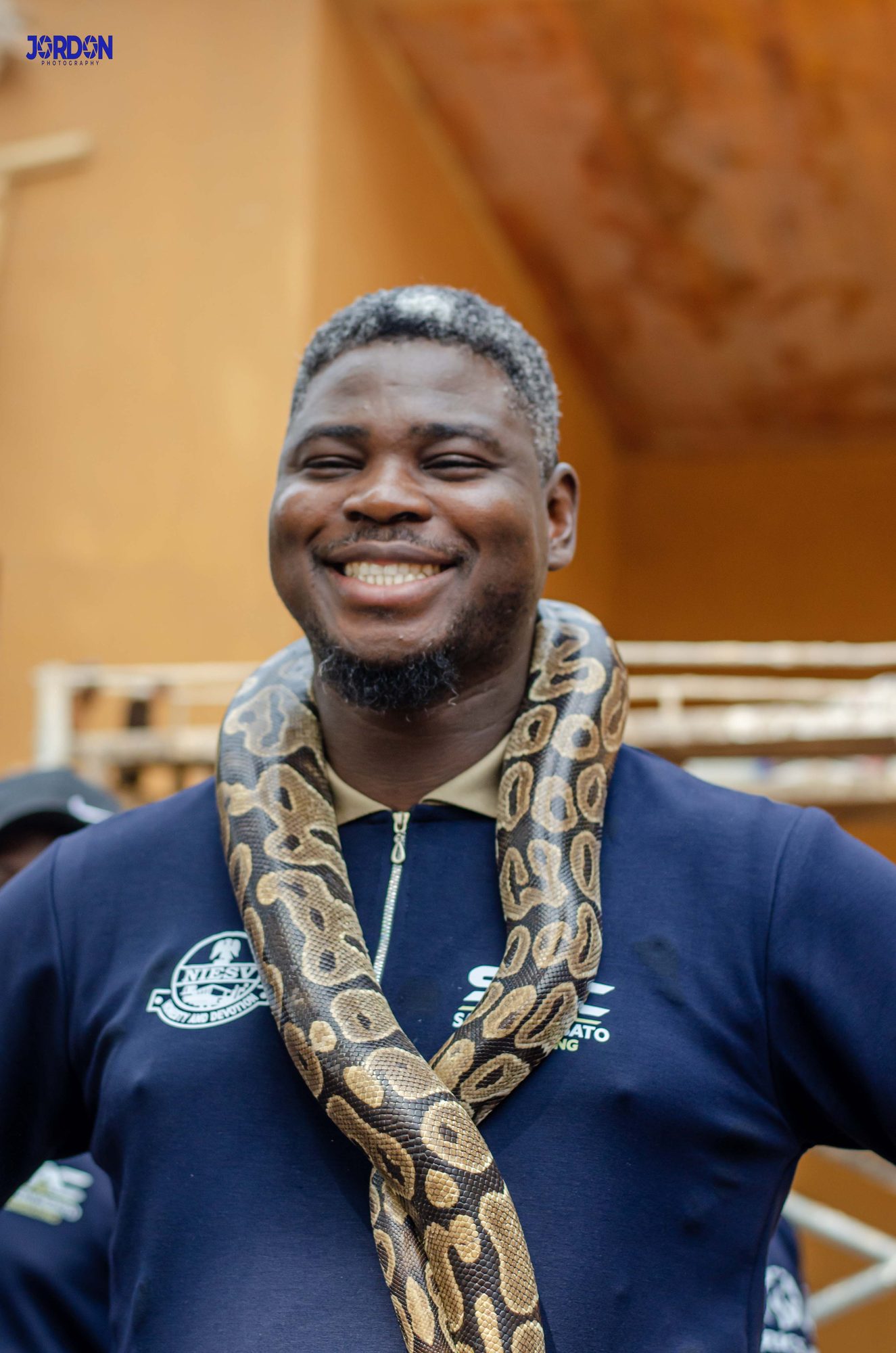
On our Ouidah Heritage Trail, we visit:
- The Temple of Pythons — yes, real pythons, kept sacred, never harmed.
- The Sacred Forest of Kpassè — where the city's founder is said to have transformed into a tree.
- The Slave Route, ending at the Door of No Return, the four-kilometer path that ends in the Atlantic.
If a public ceremony is happening during your visit and the host community agrees, we'll arrange respectful attendance. If not, we won't manufacture one. The point isn't entertainment.
The right question to ask in Ouidah is not "what is voodoo," but "what has voodoo carried, kept, and protected for the people who never stopped practicing it."
Further reading
If you want to go deeper before your trip:
- Vodou in Haitian Life and Culture, ed. Michel & Bellegarde-Smith
- Tell My Horse, Zora Neale Hurston (a flawed but landmark account from 1938)
- The Slave Coast of West Africa, 1550–1750, Robin Law
But honestly: come, listen, ask. The reading is no substitute for an afternoon with a priest who is willing to talk, over palm wine, about what it means to keep an old thing alive in the modern world.


