

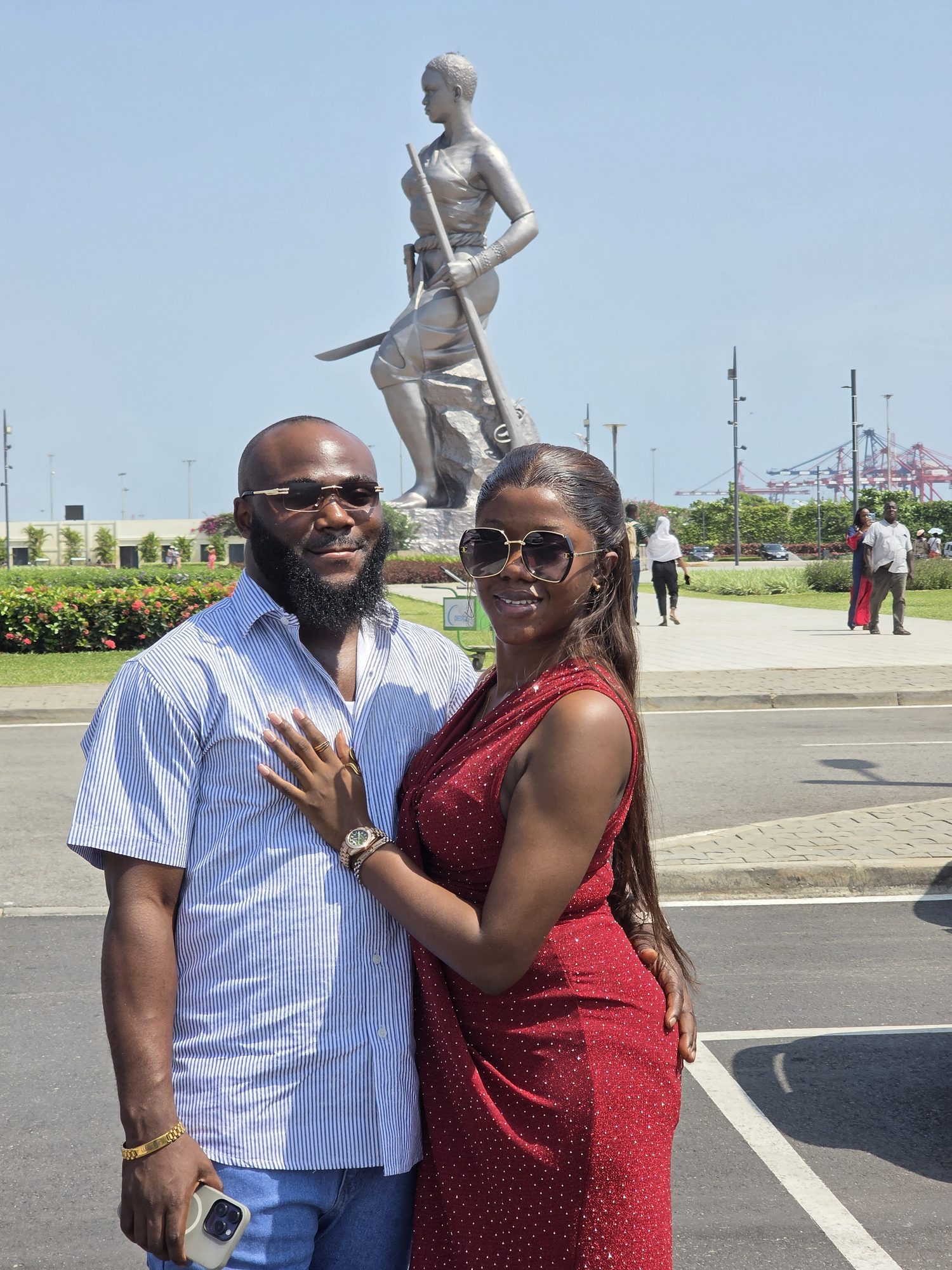
If you land in Cotonou and drive into the city, there's a good chance the first thing that stops you mid-sentence is a woman — thirty metres of her, cast in bronze, machete in hand, staring out over the boulevard.
This is the Amazon of Dahomey. Unveiled in 2022, she is one of the tallest statues in Africa, and she is not decoration. She is a correction.
Who were the Amazons?
The women she commemorates were real. The Agojie — often called the Dahomey Amazons by European visitors who could not quite believe what they were seeing — were an all-female military regiment of the Kingdom of Dahomey, active from at least the 18th century until the kingdom's fall to France in the 1890s.
They were not symbolic. They were front-line soldiers: recruited, trained, drilled, and feared. At their peak they made up a significant fraction of the entire Dahomey army. European accounts, grudgingly, describe them as among the most disciplined troops on the continent.
If the word "Agojie" rings a bell, it may be from the 2022 film The Woman King — which, whatever its liberties, sent a lot of travellers looking for the real history. The real history is here, in Benin.
Why a statue now?
Benin has spent the last few years deliberately reclaiming the story of Dahomey — not the sanitised colonial version, but the kingdom on its own terms. The same period saw the return, from France, of royal treasures looted in 1892. The Amazon statue is part of that same project: a modern nation putting its precolonial power back at the centre of the frame, in bronze, where nobody can miss it.
She isn't looking at you. She's looking past you, out to the horizon the kingdom once defended. Stand at her feet and you feel the scale of it.
Seeing her — and the rest of the story
The statue stands on the Esplanade des Amazones in Cotonou, and she's free to visit. Early morning and late afternoon are best for photographs and for escaping the heat.
But the statue is really an invitation to go deeper. The kingdom she represents was ruled from Abomey, a two-hour drive north, where the UNESCO-listed Royal Palaces still stand — and where the women warriors' story is told in full.
We build both into our tours: the Amazon monument features on Cotonou After Dark, and the full Dahomey story anchors our Abomey: Kingdom of the Dahomey trip. Do them together and you get the monument and the meaning — the way it was meant to be seen.


